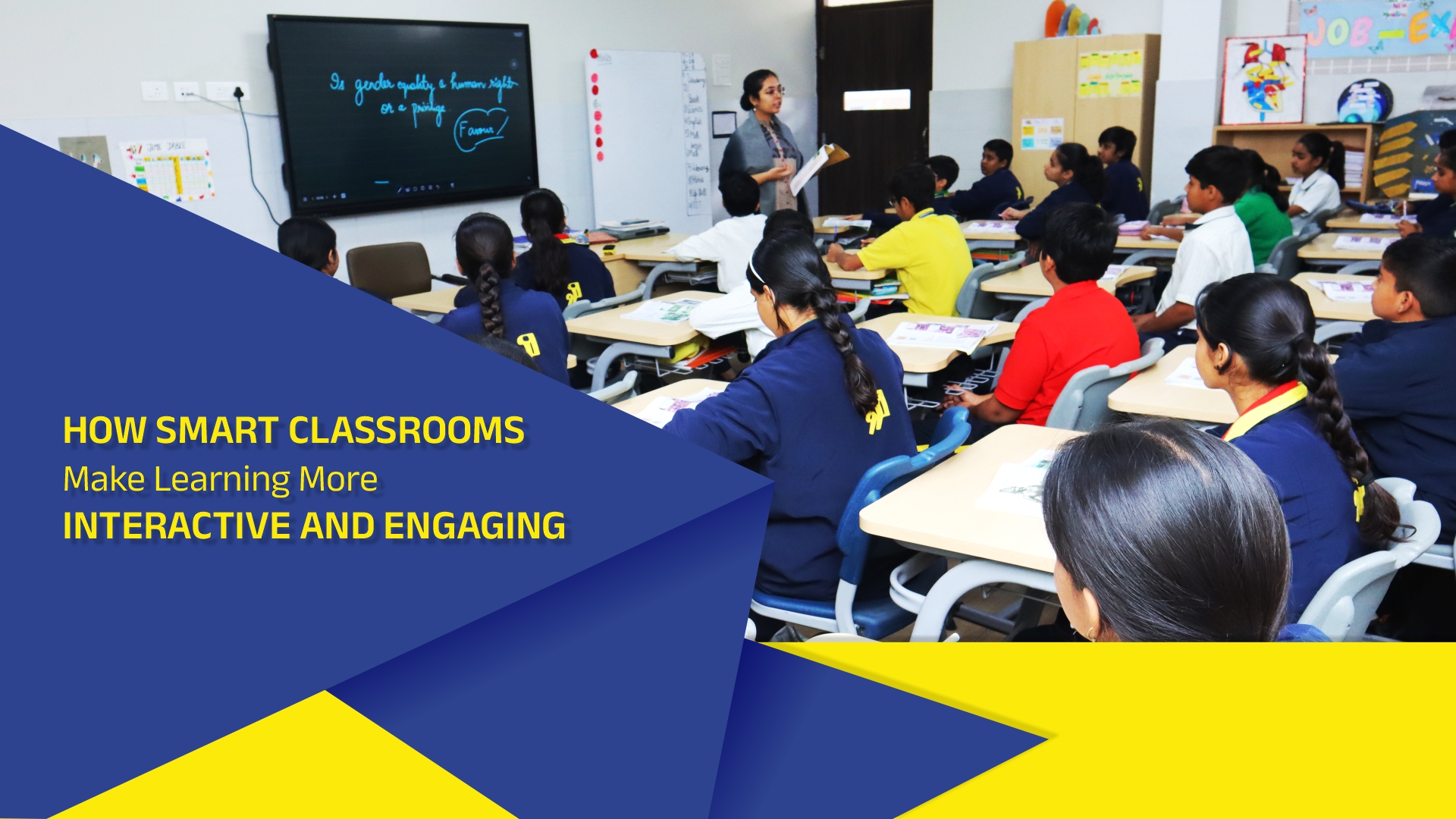
We’re living in a digital age where technology is enhancing the way kids learn at schools. Smart classrooms have revolutionised learning with their multimedia content and three-dimensional explanations of concepts.
Earlier, students used to rely only on textbooks, which would really demand the utmost concentration of children. Today, the concentration part has become a little easier thanks to interactive boards that appeal to students.
Let’s find out how technology in education is making learning more engaging.
Smart Classrooms: A Boon for Students
Smart classrooms are nothing short of a boon for students because of their interactive learning approach. These future-ready learning spaces include digital boards and audio-visual content that work wonders in explaining abstract concepts to students.
The interactive tools are meant to support traditional teaching, boosting its efficiency and effectiveness. They help teachers a lot when it comes to demonstrating difficult topics to students that they otherwise find tough to understand through textbooks.
But in order to make learning more engaging, schools need to give proper training to teachers about how digital tools work. Teachers should have a clear understanding of each tool’s utility. They should know how to use digital tools based on the concepts. Students can make the most of smart classrooms only when the teachers are well-versed in using the interactive tools.
Benefits of Smart Classrooms in Schools
Smart classrooms offer various benefits to students, from turning concepts into immersive content to supporting different learning styles and encouraging collaborative learning. Let’s take a closer look at the benefits:
Multimedia Learning
Digital tools in smart classrooms are used to make lessons visual through audio, video, and animations. To give you a perspective, a teacher could help students understand what the solar system is by showing its animation. Or, a history teacher could simply use videos and animated maps to explain the different periods. Visual learning through digital tools can simplify learning profoundly.
Learning That’s Fun
When teachers use audio, video, and animation to explain lessons, learning becomes fun and interesting. Interactive tools make students pay attention to their teachers, elevating their concentration and boosting their understanding.
Digital maps, shapes, and diagrams can encourage students to participate and ask questions in the classroom. A teacher knows that their students are understanding the concepts when they start asking questions.
Simplifying Complex Concepts
Every student has a different pace at which they learn lessons and understand concepts. For some students, understanding even complex topics is a walk in the park. However, for others, that could be a nightmare. That’s where smart classrooms make a difference.
These tech-enabled learning spaces can work like a charm for students when it comes to understanding concepts. They enable teachers to explain and demonstrate complex topics through diagrams, images, and videos in different ways. When students explore the topics from different perspectives, it enhances their understanding.
Student-Centered Learning
One of the biggest advantages of smart classrooms is that they make learning more student-centered. Through videos, animations, and interactive sessions, they encourage curiosity and critical thinking in students, which boosts their knowledge. The interactive learning environment makes students explore different topics, utilise additional resources, and participate in activities. Smart classrooms emphasise how students grasp information rather than only focussing on what the teacher is teaching.
Promotes Inclusive Learning
Some students understand better through visuals, while others need animations or interactive sessions to ace a topic. Not to forget, there are also some students who need text and pictures alone to learn something.
Smart classrooms can help create a more inclusive learning experience for students with their digital tools. They support different learning styles of students without compromising on efficiency and effectiveness.
Fosters Collaboration
Smart classrooms make learning deeply collaborative through digital presentations, group tasks, and research activities. Teachers can organise activities where students need to team up to complete some tasks that require collaboration, critical-thinking, and problem-solving skills. Such activities can boost students’ communication and other soft skills, helping them turn into confident individuals.
Final Words
Smart classrooms in schools can help move learning beyond passive listening. They can make it more interactive and engaging, while giving educators more flexibility in explaining concepts. But for schools, using the technology just because it’s available should simply not be the case. Instead, they should emphasise creating better learning experiences for students by utilising the technology purposefully.
FAQs
- What’s the importance of smart classrooms?
Smart classrooms are extremely important for students because they make learning more engaging and interesting.
- Do smart classrooms improve student concentration?
Yes, smart classrooms enhance student concentration through interactive content that simplifies concepts like nothing else does.
- How do smart classrooms benefit teachers?
Smart classrooms are a boon not only for students but also for teachers. These classrooms enable teachers to explain concepts in different ways, making their lessons more effective.
- How do smart classrooms support different learning styles?
Smart classrooms support different learning styles through their digital tools and interactive content. This variety helps teachers address the different ways students learn.
- Do smart classrooms provide quick feedback to teachers?
Yes, smart classrooms in schools provide quick feedback to teachers about their students. Digital quizzes and interactive sessions allow teachers to see how well students have understood the lesson.